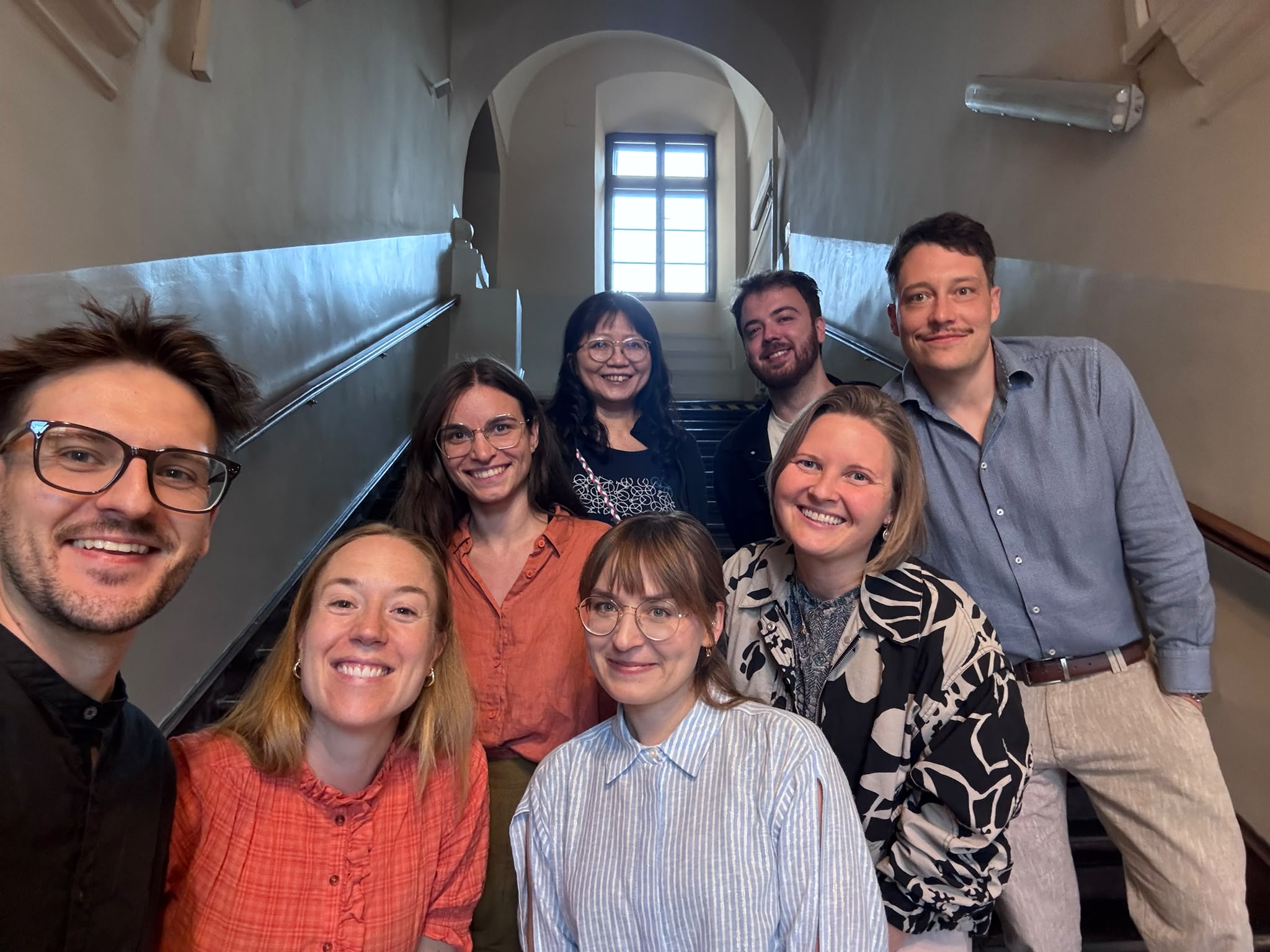
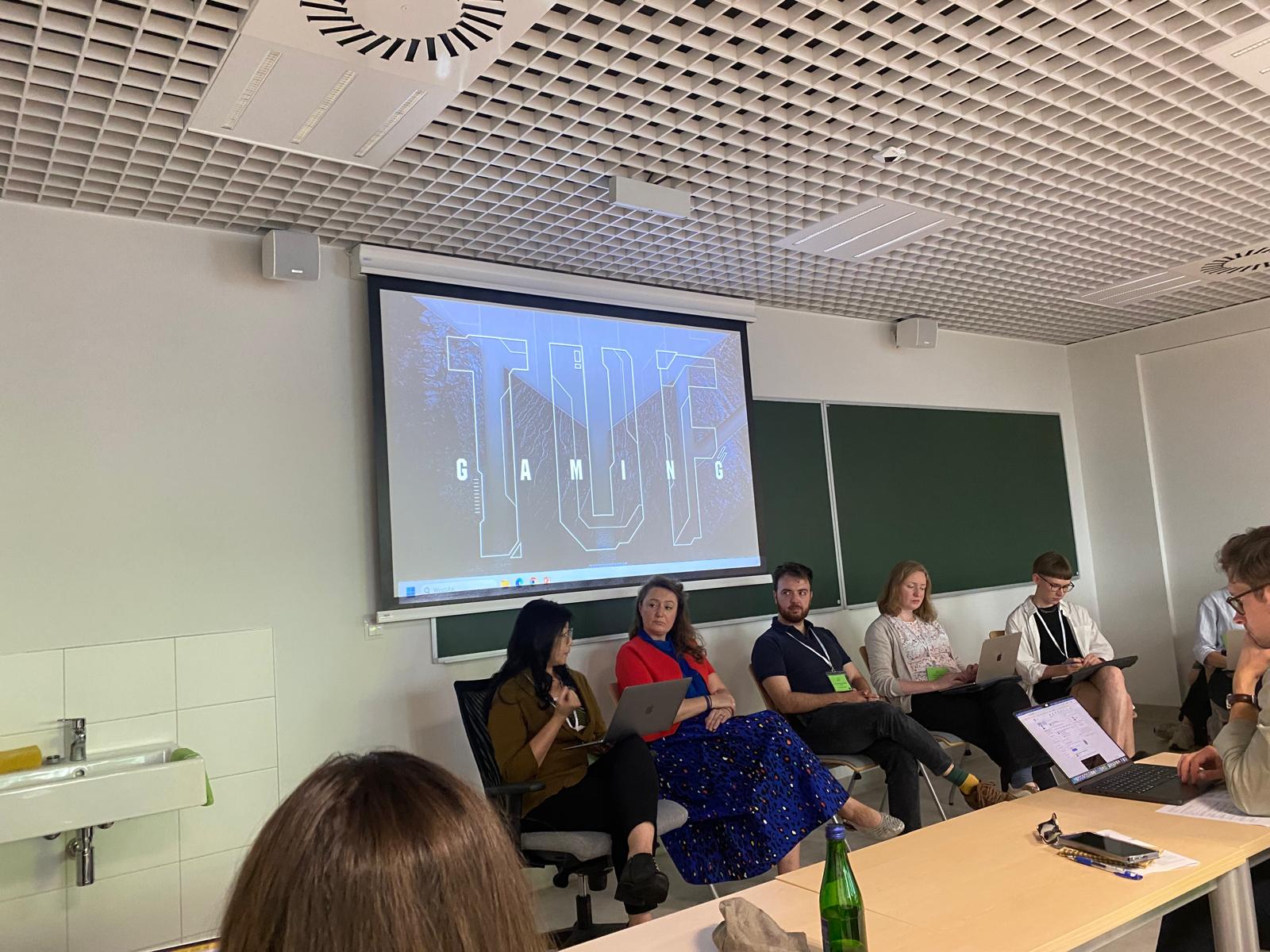
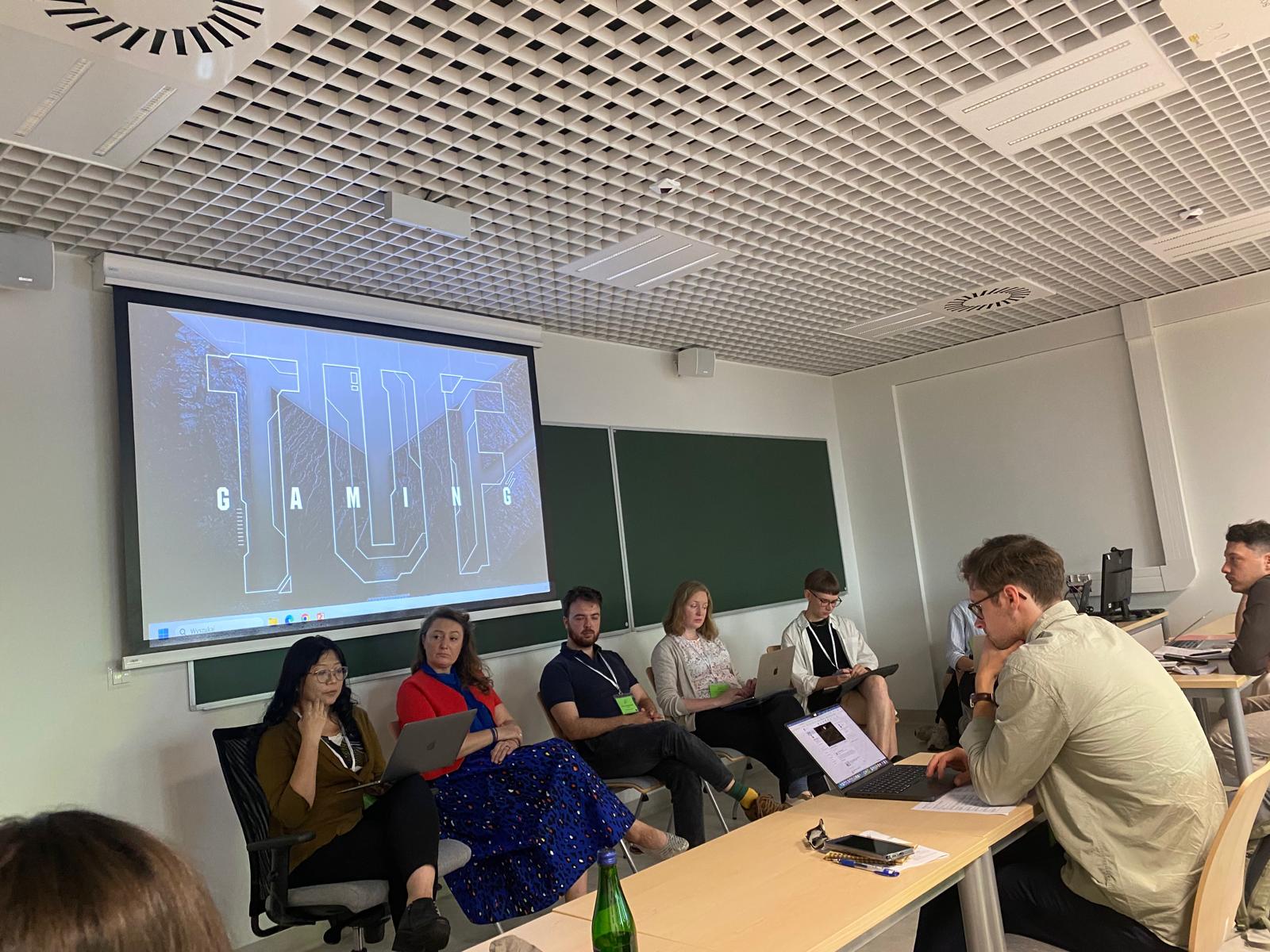
This week, the Capturing Invisible LAB at the Jagiellonian University’s Institute of Sociology co-organised two connected events around the EASST 2026 conference in Kraków, together with colleagues from ETH Zürich and the Technical University of Munich (TUM). On Monday we hosted a pre-conference workshop, and on Tuesday we ran a full panel session at EASST itself. Together, they were an attempt to ask what it means to do Science and Technology Studies (STS) from Central and Eastern Europe, rather than about it.
Monday, 7 September: STS in Central and Eastern Europe: Projects, Problems and Possibilities
The pre-conference workshop, held at ul. Grodzka 52, brought together researchers working on STS in and on the CEE region for an afternoon that deliberately avoided the conventional conference format of finished papers read aloud to a passive room. Instead, the goal was to open space for ongoing initiatives, emerging research, and, most importantly, the shared intellectual and institutional challenges the field faces in this part of Europe.
The afternoon unfolded in three parts:
- Introductions and framing, opened by Oliwia Mandrela and Tadeusz Rudek, setting out the workshop’s aims.
- Projects and provocations, with short presentations from Tadeusz Rudek and Oliwia Mandrela (Jagiellonian University), and Margarita Boenig-Liptsin together with Anna Lytvynova (ETH Zürich). Each speaker introduced a current project, lab, or network, named one challenge facing STS research in or on CEE, and left the room with a question to sit with.
- A collective reading discussion, built around two texts chosen to provoke rather than settle: Yaron Ezrahi’s chapter on the political imagination from Imagined Democracies, and Jan Surman and colleagues’ piece on historicising science in Central, Eastern and South-Eastern Europe.
The questions that structured the discussion are, in many ways, the questions the whole initiative is trying to answer: What does it mean to conduct STS from Central and Eastern Europe? How can the field engage with the region without reproducing its old role as peripheral, transitional, or merely a source of empirical cases for theories built elsewhere? Which concepts and intellectual traditions native to the region might actually travel outward and contribute to STS debates more broadly? And, practically, what collaboration and infrastructure would it take to strengthen a regional STS community that is currently more of a shared sensibility than an institution?
After a coffee break, the second half turned to synthesis: recurring themes, points of productive disagreement, possible directions for a concluding panel, and openings for future collaboration, publications, and network-building.
Tuesday, 8 September: Democracy on the Edge (EASST Panel CF19)
The following day, the conversation moved onto the main EASST 2026 programme with Democracy on the Edge: Science, Technology and Political Promise in Central Eastern Europe, a Combined Format Open Panel convened by Tadeusz Józef Rudek and Aleksandra Wagner (Jagiellonian University), Monika Wulz (Leuphana University), Sebastian Pfotenhauer and Alexander Wentland (TUM), Anna Lytvynova and Margarita Boenig-Liptsin (ETH Zürich), and Oliwia Mandrela (Jagiellonian University), who also chaired the session alongside Tadeusz.
The panel’s premise is that Central and Eastern Europe has always lived somewhat “on the edge” — of empires, political cultures, economic systems, and ways of knowing — and that this liminal position is doing real work again today, as the region navigates energy transitions and digitalisation under conditions shaped by that same history of instability and improvisation. The “edge” here is both a metaphor and a method: a vantage point for examining the implicit norms of sociotechnical progress that get taken for granted elsewhere. The framing draws on STS scholarship connecting political institutions with science and technology (Ezrahi on democracy and imagination, Sunder Rajan and Petryna on citizenship, Jasanoff on co-production), while also reaching for concepts closer to CEE’s own experience: imitation, precarity, performance, development.
Session 1, held Tuesday morning, featured a guest contribution from Carolina Pietyra, Director of KBF Kraków, alongside three papers, from Katharina Schneider, Angela Osterheider and Cordula Endter; Dagmar Vorlicek; and Tereza Butková, with Dr Shun-Ling Chen (陳舜伶) of Academia Sinica serving as discussant. Kaushik Sunder Rajan of the University of Chicago joined as a second discussant for the panel as a whole. (Two further sessions originally scheduled for Tuesday afternoon and Wednesday morning were cancelled as the programme evolved, so all of the panel’s papers converged into the single Tuesday morning slot.)
Across the papers, a few threads recurred: the cyclical relationship between 1989 and the present, and how generational imaginaries and constitutional moments echo across that gap; the layering of political, scientific, and technological infrastructure over time; questions of geography and identity — borders, peripheries, and rescaled forms of belonging; the shifting materialities of transition, from energy grids to neural networks; and the temporal textures of life on the edge: anticipation, delay, suspension.
What comes next
Both events were conceived as a beginning rather than a conclusion. The plan going forward includes a special issue drawing on the panel’s contributions, and the launch of an interdisciplinary research network, provisionally called Living on the Edge, intended to give the CEE STS community the kind of durable infrastructure that Monday’s workshop discussion identified as missing.
Thanks to everyone who travelled to Kraków for this, and especially to our co-organisers at ETH Zürich and TUM Munich for building this together with us. More soon on the special issue and the network.
Capturing Invisible LAB, Institute of Sociology, Jagiellonian University
#ScienceTechnologyStudies #EASST2026 #CentralEasternEurope #Sociology #DemocracyOnTheEdge #CapturingInvisibleLAB #JagiellonianUniversity #ETHZurich #TUMMunich #Krakow