Tadeusz J. Rudek, PhD
Assistant Professor, Jagiellonian University
Who decides about trajectories of the future? Who is allowed to imagine new pathways? How to make informed decisions about future?
About Me
My name is Tadeusz Rudek. I am an Assistant Professor at the Institute of Sociology, Jagiellonian University. I defended my PhD in sociological sciences with distinction in 2024. I have held research fellowships at Harvard University, King’s College London, and ETH Zurich, and I am a recipient of the Polish Minister of Science Scholarship for Outstanding Young Scientists.
My academic work is situated at the intersection of sociology and Science and Technology Studies (STS). I study how societies imagine, debate, contest, and materialise technological futures. My research focuses on socio-technical change, especially in relation to energy transitions, climate governance, public health, and emerging infrastructures. Across these fields, I am interested in a broader question: how do visions of the future become socially powerful, politically legitimate, and materially consequential?
A central part of my work concerns sociotechnical imaginaries: collectively held visions of desirable futures that shape how societies understand innovation, risk, uncertainty, and responsibility. I analyse how such imaginaries influence the production of knowledge, the legitimacy of expertise, public controversies, policy choices, and the allocation of resources in science and technology. My research also examines the performative dimension of imaginaries — how they do not merely describe possible futures, but actively participate in making some futures more thinkable, fundable, and governable than others.
During my fellowship at King’s College London, I developed this perspective further by focusing on the performativity of imaginaries in policy, economic expectations, and social change. My semester at Harvard University in the STS Programme helped me refine the Capturing Invisible research toolkit — a methodological approach designed to study how often implicit social imaginaries shape technological development, institutional decisions, and public reasoning.
To date, I have applied this approach to energy transition studies in Poland, China, and Taiwan, as well as to public health controversies in several European countries. In my work on energy transitions, I examine how different societies imagine decarbonisation, technological innovation, and the role of the state, markets, experts, and citizens in shaping future energy systems. In public health, I have used this framework to identify social uncertainties around childhood vaccination and to support the development of training materials for paediatricians engaging with parents.
My current research develops this agenda further by asking how plural futures are assembled across scales — from global policy frameworks and national strategies to local communities, infrastructures, landscapes, and everyday experiences. I am particularly interested in maritime and coastal transformations, where energy, climate, security, data infrastructures, environmental protection, and regional identities increasingly intersect. In this context, the sea becomes not only a geographical space, but also a contested socio-technical frontier: a site where competing imaginaries of sustainability, sovereignty, extraction, innovation, and collective life are negotiated.
Through the Capturing Invisible Lab, I develop interdisciplinary methods for studying these processes, combining STS, sociology, qualitative research, discourse analysis, stakeholder mapping, and experimental forms of public engagement. My broader aim is to understand how societies can recognise, compare, and deliberate on competing technological futures before they become locked into infrastructures, policies, and institutions.
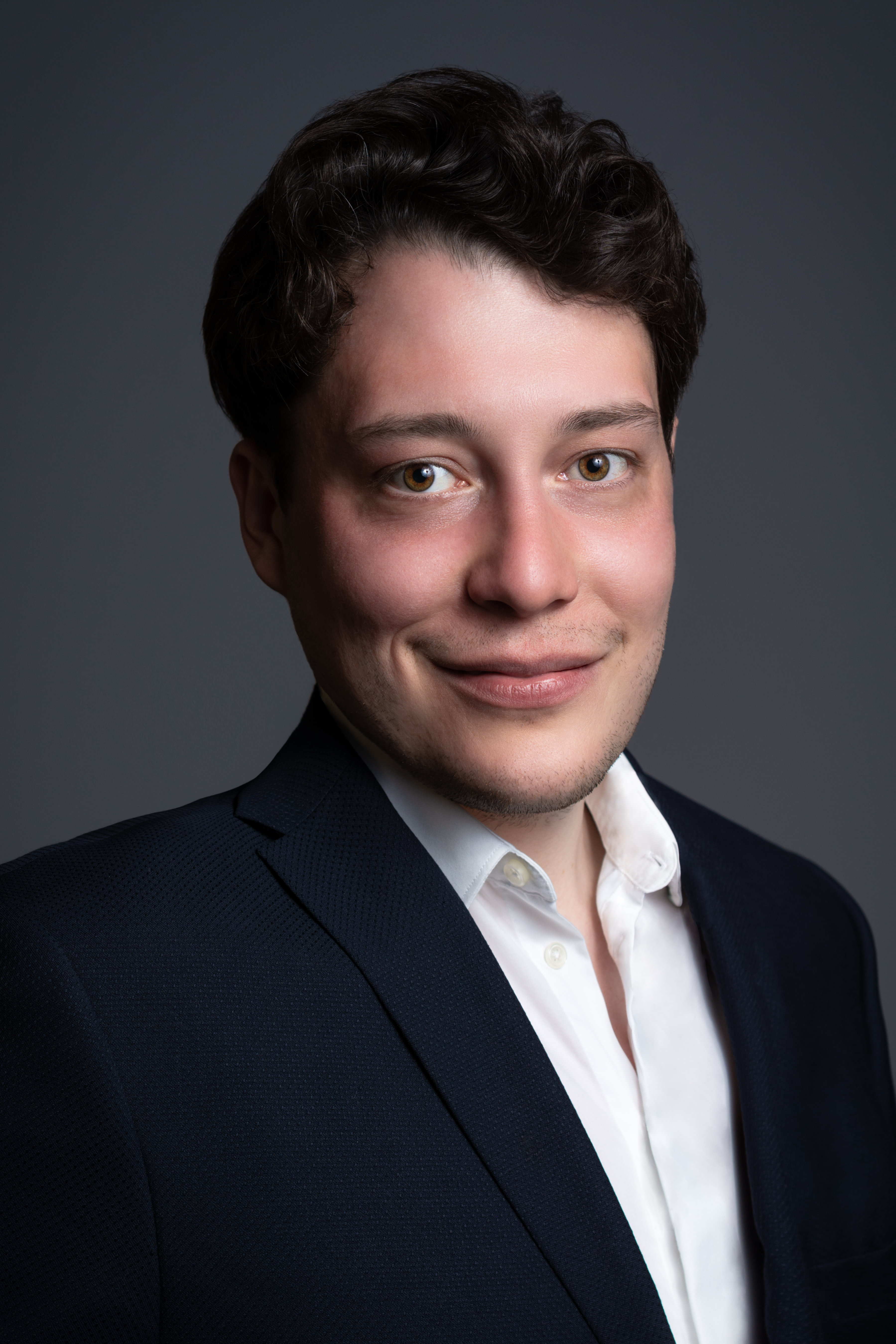
Tadeusz J. Rudek, PhD
Assistant Professor
Jagiellonian University
Google Scholar · updated 2026-08-11
- Ph.D. Sociology, Jagiellonian University (2024)
- Fellow: Harvard, King's College London, ETH Zurich